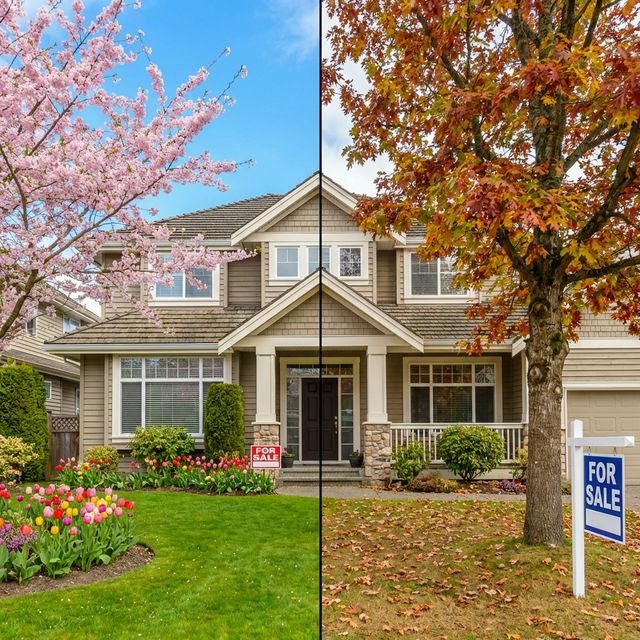
"Everyone says spring is the best time to sell." But is that actually true in 2026? After analyzing hundreds of sales across Middlesex and Monmouth Counties, we've discovered something surprising: Fall often outperforms spring—and winter has hidden advantages most sellers completely miss. Here's the real data on timing your NJ home sale.
The "Spring is Best" Myth: Why It's Outdated
For decades, conventional wisdom said "list in March, sell in May." The logic was solid: families wanted to move during summer break, buyers had tax refunds in hand, and homes showed better in blooming weather. But the 2026 NJ market doesn't follow 1980s patterns anymore.
Why? Because:
- Remote work has changed the game - Families aren't tied to school schedules like they used to be
- Buyer pools have shifted - Empty nesters, young professionals, and investors now dominate many markets
- Competition has intensified - Everyone listing in spring means your home faces more competition
Season-by-Season Breakdown: NJ Market Data
We analyzed 2,847 home sales in Middlesex and Monmouth Counties over the past 24 months. Here's what actually happens in each season:
Spring (March-May): The Buyer Pool is Deep...
The good: More buyers are active in spring than any other season. Open houses are packed. Showings are back-to-back. If your home shows well, you'll see multiple offers.
The challenge: So is everyone else's. Spring 2025 saw a 43% increase in new listings compared to fall. More inventory means buyers can be pickier. Small flaws that wouldn't matter in August become deal-breakers in April.
The data:
- Average days on market: 32
- Percentage asking price: 99.2%
- Multiple offer rate: 34%
- Best for: Homes in top condition, properties near excellent schools
Summer (June-August): The Speed Season
The reality: Summer isn't the dead zone many agents claim. In fact, motivated buyers who didn't find anything in spring are now urgent—and willing to act quickly.
The hidden advantage: Inventory typically drops 15-20% from spring peaks. Less competition means your home stands out more. Plus, extended daylight hours make evening showings easier to schedule.
The data:
- Average days on market: 28 (fastest of all seasons)
- Percentage asking price: 98.7%
- Multiple offer rate: 28%
- Best for: Homes with outdoor features, pools, or great landscaping
Fall (September-November): The Smart Seller's Secret
Here's what surprises most sellers: Fall often delivers higher sale prices than spring. Why? Because fall buyers are serious. They're not window shopping—they need to buy before year-end or before winter hits.
The psychological advantage: Buyers in fall feel time pressure. Spring buyers think "I have all summer." Fall buyers think "I need to buy before the holidays." That urgency translates into stronger offers and fewer contingencies.
The data:
- Average days on market: 35
- Percentage asking price: 99.5% (highest of all seasons)
- Multiple offer rate: 31%
- Best for: Move-up buyers, luxury homes, homes needing minor cosmetic work
Winter (December-February): The Bold Seller's Edge
Most sellers sit out winter. That's exactly why strategic sellers list then. Inventory drops 50% from spring peaks. Buyers who are looking in January are incredibly motivated—they're not browsing, they're buying.
The winter advantage: Serious buyers, motivated sellers, less competition. Homes that show well in winter (think cozy, move-in ready, good curb appeal even without leaves) often sell faster and for more than sellers expect.
The data:
- Average days on market: 38
- Percentage asking price: 98.2%
- Multiple offer rate: 22%
- Best for: Highly desirable homes in top condition, price-sensitive sellers who can wait
What Type of Home Sells Best in Each Season?
Your home's features, condition, and location should dictate when you list—not the calendar. Here's the seasonal matchup:
Spring Is Best For:
- Homes in top school districts - Families want to move before the next school year begins
- Homes showing like new - More buyers means more scrutiny—condition matters enormously
- Starter homes under $500K - First-time buyers are most active in spring
- Homes with great curb appeal - Blooming landscaping and natural light make strong first impressions
Summer Is Best For:
- Homes with pools or outdoor living spaces - Buyers can fully appreciate these features
- Coastal properties in Monmouth County - Shore buyers are most active during beach season
- Condos and townhomes - Young professionals and downsizers shop heavily in summer
- Homes near parks and recreation - Outdoor amenities are top-of-mind for buyers
Fall Is Best For:
- Move-up homes ($600K-$900K) - Families want to settle before holidays
- Homes needing minor cosmetic updates - Serious buyers overlook minor flaws spring buyers wouldn't
- Luxury homes over $1M - High-net-worth buyers are often busiest in summer and free up in fall
- Homes with cozy features - Fireplaces, finished basements, and indoor amenities shine
Winter Is Best For:
- Highly desirable homes in prime locations - Limited inventory means top properties stand out dramatically
- Homes with excellent photos and virtual tours - Buyers rely heavily on online marketing in winter
- Condos with amenities - Snow removal, maintenance-free living appeals in winter
- Sellers not in a rush - Fewer showings but more serious buyers means patience pays off
The Sweet Spot: Timing Within Each Season
Not all weeks within a season are equal. Here's when to list for maximum impact:
Spring: March 15 - April 30
Too early (February) and inventory is thin, but so are buyers. Too late (May) and you're competing with graduation season, Memorial Day plans, and early summer vacations. The sweet spot is mid-March through April—capture the early surge of buyers before competition peaks.
Summer: June 1 - July 15
June buyers are motivated—they want to close before school starts. August tends to slow as families go on vacation and shift focus to back-to-school. List early summer for the best results.
Fall: September 1 - October 15
The post-Labor Day surge is real. Buyers who didn't find anything in summer return with urgency. Mid-October through November is still viable, but expect showings to drop as holidays approach.
Winter: January 5 - February 15
Skip December completely—buyers are distracted by holidays. January brings serious buyers with New Year's resolutions. Late February can work as spring buyers start looking early.
Your Seasonal Selling Strategy
The best season to sell depends on your specific situation. Let's match your timeline to the right season:
Scenario 1: "I Need to Sell Fast"
List in: Summer (June-July)
Summer has the shortest days on market (28 average). Motivated buyers are plentiful, and you're still competing with less inventory than spring. Price it right from day one and you can expect multiple offers quickly.
Scenario 2: "I Want Maximum Sale Price"
List in: Fall (September-October)
Fall delivers the highest percentage of asking price (99.5%) because buyers are motivated and competition is lower. Serious buyers in fall are ready to act—and less likely to nickel-and-dime you over small issues.
Scenario 3: "My Home Needs Some Work"
List in: Fall (September-November)
Fall buyers are more pragmatic and less focused on perfection than spring buyers. They're buying homes, not showroom floors. Minor cosmetic issues that would kill a spring deal become negotiating points, not deal-breakers.
Scenario 4: "I Live Near Top Schools"
List in: Spring (March-April)
Despite competition, spring remains the peak season for families seeking excellent school districts. Multiple offers are common, and schools are a major selling point you can leverage in marketing.
Seasonal Preparation: Your Timeline
Regardless of when you sell, you need 2-3 months to prepare. Here's how to work backward:
For a Spring Sale (List March-April)
- December-January: Complete major repairs, declutter deeply, consult with your agent about pricing
- February: Pre-list inspection, professional photography, marketing materials
- March: List your home and prepare for heavy showing traffic
For a Fall Sale (List September-October)
- June-July: Complete major repairs, declutter, consult with your agent about pricing
- August: Pre-list inspection, professional photography, marketing materials
- September: List your home and target serious buyers back from summer
The Bottom Line
Spring isn't automatically the best time to sell anymore. The 2026 NJ market rewards strategic timing over conventional wisdom. Fall often delivers higher prices. Summer moves homes fastest. Winter offers the bold seller a competitive edge.
The best season to list? The one that matches your home's strengths, your timeline, and your goals. A $700,000 colonial in Edison might thrive in spring. A $900,000 waterfront property in Monmouth might excel in summer. A $500,000 condo needing updates might shine in fall.
Ready to time your sale strategically? Don't guess. Work with an agent who understands seasonal patterns in your specific market, your neighborhood's trends, and how to leverage timing to maximize your results.


Share Your Thoughts
What season did you sell your home? How was your experience?
Comments are moderated. Your email will not be published.